[ Previous ]   [ Next ]

Desirable

Hedonic Psychology

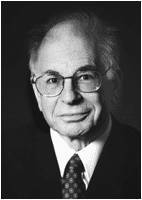
In “Well-being –The Foundations of Hedonic Psychology” Daniel Kahneman, Ed Diener, and Norbert Schwarz write: “We are particularly hopeful that a scientific understanding of hedonic experience will allow for the development of valid hedonic indicators that reflect the pleasantness of life in the everyday experience of people. At present economic indicators hold the most sway in policy circles. Yet, the economic approach is limited in several ways. First, it focuses on those aspects of life that can be traded in the marketplace. Thus, desirable goods such as love, mental challenge, and stress are given little consideration.”

I’m not sure if for example love – a desirable good, I agree – is not traded in the marketplace. To avoid obvious misunderstandings I’m not speaking about sex. I would argue that love is exchanged for love or affection or security, to name just a few other desirable goods. You don’t need money to have a marketplace.

Note that Kahneman, Diener and Schwarz qualify “stress” as a desirable good.


21 comments Last_comment
Not only stress, but pain and sorrow are desirable goods as well. I know some people who appear to cherish their pain and sorrow as the most valuable goods they posses. It's the only thing, they think, that separates them from the rest.

I'm not so lucky: the amount of pain and sorrow I have is not remotely sufficient to separate me from common people. But who knows what the future brings... I remain hopeful.
Arnon
I agree that love is a tradeable good for which a marketplace exists. Are there any bubbles, you think, just like there are on financial markets?

Do you know the works of Frank Layard, one of the happiness scientists? I believe - but am not sure - that this is one of the people involved in the Bhutan indicator of gross national happiness. I am sure you are aware that Bhutan decided that gross national product was not a suitable measure for growth. I believe Tony Blair also explored the idea of developing such indicator.
Arnon
PS are you familiar with the method of willingness to pay that economists use to indicate the monetary value of experience goods like love, sex, security, attention, self-esteem, etc?
Stress
Certain amount of stress is certainly desirable because it makes us 'perform' better. Pain is useful because it makes us realise how great life is without it. It also makes us realise what things in our life have the most value to us. The trick is to reach a good balance.

I am not so sure about tradeability of love, pain and stress however...
Mao
I'm not familiar with that method. What could you tell me about it?
Mao II
I did interview Richard Layard for a Dutch television program.

Mr. Layard is an economist who wrote a book about happiness.

I’m quite convinced that we are speaking about the same Layard, but please enlighten me if I'm wrong.
Sasja
Have you ever read Voltaire's "Candide"?
Arnon
No. I figure I should?
Sasja
Yes, you should.
To Arnon, on K. van het Reve
In 'Luisteraars' K. van het Reve dismisses the word 'identity' hastely, without going into it. In my memory there is another essay wherein he elaborates his thoughts. Unfortunately I'm not able to retrieve it.

It is not to be excluded that my memory betrayed me.

I am sorry for adressing myself to you, on this place; but you are as close I can get to a van het Reve expert.
Don't take it ill of me.
Pjötr
I remember vaguely that K. van het Reve ridicules the in his view fashionable preoccupation with identity.
(If you are interested in this I can try to find the exact source.)
In several other essays Karel van het Reve ridicules S. Freud as you might know. Not completely without merits, but in my opinion he is too harsh on Freud. In my last essay on Karel van het Reve, (http://www.arnongrunberg.com/work/301) published last fall, I tried to come up with an explanation for his in my view obsessive dislike to Freud.
arnon
to start with reading freud what would you recommend?
Beata
“Civilization and its discontents” and/or “Totem and Taboo”.
There's no need for money on a marketplace, I agree. But I don't agree with the statement that love is exchanged for love on a marketplace. I think consciousness about the trade is a must in all situations that are labelled as a marketplace.

If I kiss someone with the tongue, I'm exchanging saliva but I'm not trading it for other saliva. The exchange happens outside of the natural cause. It isn't consciously done.

I don't think there's love consciously traded on any market.

What I believe Kahneman, Diener and Schwarz qualify as "stress" is the matter that is linked with "depression". A De-pression leads to unhappiness, so pression (i.e. Stress) is a desirable good. Albeit not in a conscious way, I think.
Who wakes up in the morning and says to himself "I 'm in need of some stress today".
To Arnon
I would highly appreciate it, if you would take the trouble.
Dens
I assume that your primary goal is not to mix your saliva with the other person’s saliva when you make out.
At best that’s a side effect of the French kiss. I.e. what's being traded is not saliva, you were right to point that out, but something else.
Pjötr
Haven't found it yet.
To Arnon
I have reserved confidence that you will live up to your promise.

Please note that the stress is on confidence.
Pjötr
Perhaps you are referring to this:

Karel vh Reve: Freud, Stalin en Dostojevski (1982)
First piece: 'Vooroordeel tegen Dostojevski'
Quotes:
"(...)
... De eerste lezers van Toergenjevs Adelsnest verweten hem dat de vroomheid van Liza niet 'verklaard' werd, en Toergenjev schreef er toen als de bliksem een hoofdstukje bij over haar religieuze jeugdervaringen. Tegenwoordig hoef je het ontstaan van dat karakter niet meer te 'verklaren', of het moest zijn dat de held op zoek gaat naar zijn 'identiteit' en zelf voor een 'verklaring' zorgt in de vorm van moederbinding, jeugdtrauma of latente homosexualiteit.
Maar de eis van die 'ontwikkeling' is gebleven. Dat terwijl a mensen in werkelijkheid helemaal geen 'karakter' hebben, b mensen tijdens hun leven nauwelijks veranderen (behalve een beetje ontplooiing aan het begin en een beetje degeneratie aan het eind), en c niet is in te zien waarom een schrijver speciaal tot taak zou hebben zich met deze goeddeels imaginaire zaken bezig te houden. Men kan met evenveel recht van een schrijver eisen dat hij vooral maaltijden of politieke partijen moet beschrijven of geboortes en dan niet moet vergeten te vertellen hoe die dingen ontstaan zijn.
(...)
... Homerus bijvoorbeeld is een zeer goede schrijver. Maar de eis dat alles wat iemand zegt 'psychologisch verantwoord' moet zijn (een idiote eis natuurlijk, want sinds de schepping der wereld heeft zich nog nooit iemand op psychologisch verantwoorde wijze gedragen) bestond voor Homerus niet. (...)
==========================
Hesper
I guess this is it. Thanks on behalf of Pjötr.
To Grunberg and Hesper
I'm much obliged; I thank you both for having taken the effort.