[ Previous ]   [ Next ]

Without language

Desire

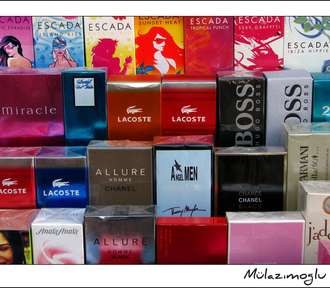
In 1980 J.M. Coetzee wrote an essay on advertising, “Triangular Structures of Desire in Advertising” (later reprinted in “Doubling the Point”): 'Inglis, like Leavis before him, clearly believes that love, sex, the family, and so on are debased by being used to glamorize mundane objects for sale. “How can one truly love,” the underlying argument runs, “if one believes that perfume X or deodorant Y is the prerequisite of love?” The immediate contrast being drawn is between a world in which true (unmediated) love is felt and a world in which X and Y are felt to be the prerequisites of love. But the deeper contrast is between an original world of true (unmediated) love in which X and Y did not exist (because there was no need for them) and a modern world in which they do. In other words, the contrast is between an unmediated original and a fallen, mediated modern; and the hidden yearning is for an unmediated world, that is, a world without language.’

According to Coetzee we are all condemned to vicarious desire. By expressing our yearning we betray it.


17 comments Last_comment
[I wanted to cancel this but there was only an edit option. Sorry. I'm sure someone else will ask what I was wondering.}
The card you posted on 2009/02/09 is a perfect example of how I like to express my sincere emotions.
By experssing our yearning to what?
Arnon
Speaking of 'a world without language':

http://www.youtube.com/watch?v=LhX1tvTgqC8
So i should stop yearning. I'll begin in the new year.
Van der Meer
I don't believe we are capable of making that choice (I'm not a Buddhist) and I don't see how this entry leads to your conclusion.
Language or death
I haven't read Coetzee's essay. But I wonder: a world without language probably equates to a world without awareness. Our awareness of our existence seems, after all, to be linked to our internalized language. This really means a world without self-awareness. If you crave an end to self-awareness you actually crave death. So I am not sure about this logic. The argument seems self-defeating.

Is there any meaning to the concept of "love" without language (spoken or otherwise)?

But perhaps this is what Coetzee is arguing, since the excerpt is only his comment on Inglis' and Leavis' hypotheses.
"By expressing our yearning we betray it."

There is nothing to betray if you don't yearn. Maybe putting it to a full stop is not possible, but i could do with less yearning, less percistent yearning. Obsessive behaviour.
Mr. Grunberg
Does Coetzee mean that when we express our yearning for true love we betray it because our yearning can't ever be fully satisfied? Are we than betraying it just with the hope of accomplishing it?
Calisha
No. Buy "Doubling the point" and you can read the essay yourself.
there is a typo in the last sentence of the first paragraph "and unmediated original".

It seems very interesting, I will be looking for this essay.
Dries
Yes, thanks! I'll correct it.
Desire - Structuralism - (M)ad Men
"Triangular Structures of Desire..."
A title as luring as those of the chapters in Arthur Koestler's books 'The Act of Creation' and 'The Ghost in the Machine', which have some bearing on this subject.
(As has Willem Frederik Hermans: 'Phenomenology of the Pin-Up Girl'!)
"(...)
The points of immediate relevance of Girard's theory to the analysls of advertising can thus be summarized as follows:
1) Triangular structures of desire have their origin in a yearning for transcendence unsatisfied in the modern world.
2) The nature of triangular desire is that the subject yields the choice of his desires to the model.
3) Its characteristic concomitant emotions are self-mistrust, envy, jealousy, resentment.
(...)"
--------------------------------------------------
'Of course' advertising debases love, sex, the family and so on, that's (also) why many people despise commercials, in which families and so on are always depicted as typical constructs of the admen's imagination.
But what's new since Vance Packard's 'The Hidden Persuaders'
[An introduction to the techniques of mass-persuasion through the unconscious.] (1957)?

Hidden persuaders causing hidden yearnings.
The 'hidden yearning for an unmediated world, a world without language' seems to me to be a step too far: after all we are talking 'advertising' here. Advertising language.
Who would agree on some notion that without any media - so without advertising - we are (subconsciously I assume!) yearning for a world without language?

You could well argue that people who run to the shop to buy some product because they watched Andie McDowell use it on TV, lead 'vicarious' lives. (- Coetzee's 'eternal mediation')
But are we (therefore) condemned to vicarious desire(s)?
'By expressing our yearning we betray it'?
Is this the hidden yearning, the one for 'true love' etc. in an unmediated world, or the debased and corrupted hidden one in this mediated modern world of ours?
However you want to put it all, and I agree 'triangular structures of desire' sounds impressive enough, I still think it all boils down to the 'meaning of meaning', semiotics ("confusing signified with signifier"), philosophical and linguistic little angels on the point of a needle.
We're talking object - 'mediator' - subject.
And language, sure. But I'm afraid Coetzee's analysis & conclusions leave me quite unimpressed.
-------------------------------------------------------
- F.R. Leavis: The Common Pursuit (1952), a.o.
- See his conflict with René Wellek on some points of philosophy & the critic and literature:
[ -- René Wellek {Wellek & Warren: Theory of Literature (1949)}]
[ - http://www.the-rathouse.com/ReneWellek.html]
===========================================
@ Carlos Dee & Calisha Mienona {...are we thEn betraying it....}
- In case you might still want to read it:
http://archive.lib.msu.edu/DMC/African%20Journals/pdfs/Critical%20Arts/cajv1n2/caj001002005.pdf
=====================================
Dries
It's a brilliant essay.
Hesper
Thanks for the link to Coetzee's essay.

A comment is a footnote to the entry. I know you are a name-dropper, try to be a more economical one.

Since I said that you were charming you seem to suffer from hubris.
name-dropper
You dropped Inglis and Leavis and Coetzee to start with.
So I dropped some more. (Not only providing links to their names but specifying some works dealing with the subject.)
Am I to understand that you prefer one-liners on a philosophical subject?
I'm sorry if that invokes the word 'hubris'.
I'll try to be more economical, but you will have understood that I dislike twittering on some of the more serious subjects you post on this blog.
That's why you didn't deal with any of my serious remarks about the essay itself?
I'm really sorry I got you to give ad hominem arguments only.
(Yes, hubris, I know)
Hesper
Your comment boils down to “the meaning of meaning”.
As they say in court: “No further questions."
The opposite of a wordy comment is not a one-liner.