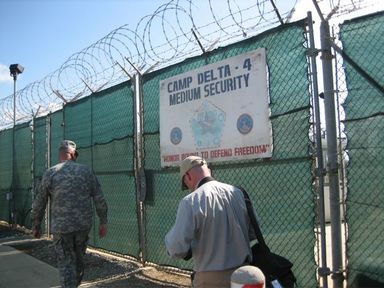
In the March issue of Harper’s Magazine Scott Horton writes about “suicides” at Guantánamo Bay that may have been homicides:
‘Nearly 200 men remain imprisoned at Guantánamo. In June 2009, six months after Barack Obama took office, one of them, a thirty-one-year-old Yemeni named Muhammed Abdallah Salih, was found dead in his cell. The exact circumstances of his death, like those of the deaths of the three men from Alpha Block, remain uncertain. Those charged with accounting for what happened—the prison command, the civilian and military investigative agencies, the Justice Department, and ultimately the attorney general himself—all face a choice between the rule of law and the expedience of political silence. Thus far, their choice has been unanimous.
Not everyone who is involved in this matter views it from a political perspective, of course. General Al-Zahrani grieves for his son, but at the end of a lengthy interview he paused and his thoughts turned elsewhere. “The truth is what matters,” he said. “They practiced every form of torture on my son and on many others as well. What was the result? What facts did they find? They found nothing. They learned nothing. They accomplished nothing.”’
In the winter of 2007 I visited Guantánamo Bay and I asked Navy Captain Gary Haben, responsible for the Combatant Status Review Tribunals and Administrative Review Boards: “Have prisoners been tortured here?”
Captain Haben answered: “There’s no torture here. These rumors are myths from the outside world.”