[ Previous ]   [ Next ]

Romantic suicide

First name

Coetzee on Goethe’s “Werther” in NYRB:

‘If Goethe was now surrounded by a buzz of scandal in which art was hopelessly confused with life, he had only himself to blame. He had meant to maintain an ironic distance between himself as author and Werther as character; but for most readers the irony was too subtle. As a text ostensibly assembled from writings the dead man had left behind, Werther lacks a guiding authorial voice. Readers naturally identified with the point of view of Werther himself, the sole narrator until the late appearance of his “editor” (Wilhelm’s responses to Werther’s letters are not reproduced). The excesses of Werther’s language, the discrepancies between his idealized view of Lotte and Lotte’s often coquettish behavior, were passed over by all but the most attentive readers. Werther was read not only as a roman à clef about Goethe and the Kestners, but as an endorsement of Romantic suicide.’

Read the complete article here.

Nothing much has changed, for most readers the irony is too subtle.
Perhaps that’s why so many authors are not very much interested in subtleties.

(Coetzee writes: “In the spring of 1771 Werther (no first name), a young man of good education and comfortable means, arrives in the small German town of Wahlheim.” I always thought, I must admit, that “Werther” was a first name.)

S

11 comments Last_comment
Well, you're in good company. I also had this idea for a long time; that is, till today.
Well, you're in good company.
( I always thought, I must admit, that “Werther” was a first name. I even thought that “Werther” was simply a misspelling of “Wernher”.)

And was is our connotation with ‘passion’ nowadays. A wild and violent outburst ?
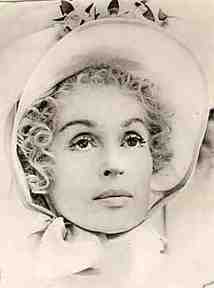
Is that Greta Garbo?
[ Comment removed ]
readers and writers
But if I read Coetzee correctly, not only the audience was to blame for this 'misreading'. Goethe may have tried to distance himself from Werther (through irony), at the same time Goethe was drawn to this 'passionate side of himself'.

So perhaps irony is also part of the self-deception of authors: a faculty that allows them to think they can control or at least distance themselves from their obsessions.

Coetzee:
"Between Goethe and his Werther self there was a complex, lifelong relationship that swung back and forth. In some accounts, Werther is the self he had to split off and abandon in order to live (Goethe spoke of the “pathological state” out of which the book emerged); in others, Werther is the passionate side of himself that he sacrificed, to his own cost. "
Hallo Arnon, speciale naam trouwens, nooit eerder gehoord. Speciale naam, heel speciaal persoon. Ik geniet elke dag van je column.. Zet die grijze massa wel aan het werk... Raakt me vaak in mijn ziel. Net alsof ik dat zelf had kunnen zeggen.. Dat was het dan. Mag ik een handtekening haha. Groet van Karla Willekes.
Romantic suicide is the most selfish act - it doesn't deserve that silly adjective .
selfish
I have a hard time trying to see suicide as selfish.
Wouldn't the preservation of the self be something of a condition for some one or some act to be selfish?

The avoidance of pain is not usually selfishness, I think, although torturers and extortionists will no doubt have the technology to make you believe it.
Strong
Irony can definitely be used as self-deception.
Irony can become an excuse for inexcusable behavior as well.