[ Previous ]   [ Next ]

Quake with fear

The novelist's job

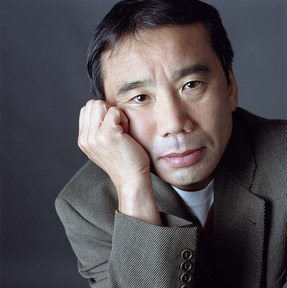
Haruki Murakami writes in Ha’aretz: “I have only one reason to write novels, and that is to bring the dignity of the individual soul to the surface and shine a light upon it. The purpose of a story is to sound an alarm, to keep a light trained on The System in order to prevent it from tangling our souls in its web and demeaning them. I fully believe it is the novelist's job to keep trying to clarify the uniqueness of each individual soul by writing stories - stories of life and death, stories of love, stories that make people cry and quake with fear and shake with laughter. This is why we go on, day after day, concocting fictions with utter seriousness.”

I beg to differ. I fully believe it is the novelist’s job to keep trying to clarify the uniqueness of the System. We should prevent our souls from tangling the System in their web. This is why we go on, day after day, concocting fiction with utter seriousness.

(How come a butcher would never declare that he goes on slaughtering chickens with “utter seriousness”?)


43 comments Last_comment
In ancient times, the System was probably called The Gods. Our clumsy System does match the capricious Gods, I suppose.
Could or should we prevent our souls from tangling other souls in their web, or vice versa?
The butcher. On my way to work, I often see a truck loaded with chicken meat. On the truck side there was a comical picture of a medieval man, holding a chicken by its neck with his left hand and hiding a knife behind his back with his right hand. One day the knife has disappeared. Has the butcher’s company suffered from ‘utter seriousness’?
Arnon
Could it be because a butcher is never asked why he continues to slaughter chicken day after day? Writers are often asked why they write. They usually come up with interesting answers , I suppose . The scientific way of looking into this problem would be to ask a number of butchers, carpenters, policemen, office workers, car-salesmen and builders why they continue to practice their trade day after day. Perhaps the answers will be very interesting.
Reinout
Let's assume you are right -- is "with utter seriousness" an answer to the question "why"?
Isn't it simply because slaugtering chickens is not very fictuous?
The butcher's work is rarely preserved more than 1 year. A novelist's work is preserved quasi-infinite. Delivering something quasi-infinite must come with utter seriousness. An architect wont say "Oh well. I had some great fun designing this building. I didn't take it that serious" for his job needs trust.

If a butcher messes up, we 'll say "better luck next time". If an architect messes up he'll be slaughtered before the eye of Average Joe.
I agree with Reinout.
If we 'ld have a culture in which, not writers, actors and (wannabe) singers are being admired and interviewed but , butchers, policemen and schoolteachers, they would all try to come up with interesting answers on the question"why". Still, I must say that "with utter seriousness" sounds a bit strange. A bit too moralistic also, tending towards fanaticism, which I don't think is a very admirable trait.
Dens
So because a work of art is supposedly eternal the creator of this work needs to stress that he has concocted his fiction with “utter seriousness”?
Whereas the butcher who kills a chicken for the pleasure of one maybe two evenings can remain silent about his work? Or a chef concocting a crème brûlée – no need for him to say: “I concocted this crème brûlée with utter seriousness.”
How strange that what strives to be eternal appears to be so frivolous.
And why are you so convinced that killing is not eternal?
Perhaps Murakami feels the need to defend his trade against, let's say, bourgeois or utilitarian values. Art, after all, is useless.
Interesting question why he should feel this need. He could be an example of 'qui s'excuse s'accuse'.
All
It is perhaps the fact that writers create fiction that triggers the need to say that this fiction is created with 'utter seriousness'. Especially if the relevant writer creates things that are very funny, bizarre, or strange and the like it makes sense to state that creating these absurdities is in fact done in a serious manner and serves a serious goal (for this partuicular writer at least). The need to emphasize seriousness is less pressing if you slaugther chicken.
When the butcher messes up and cuts off his finger while trying to kill the chicken, I'd say that's pretty permanent. He'd better take his job damn serious.

And, Arnon, I agree with you. A cook is an artist too. Not all art is permanent, not everything that is permanent has to be taken seriously and not everything that has to be taken seriously is permanent.
I don't like lumping together all people sharing one profession. One does it for the greater good, the other because there's nothing else they're any good at.
@Arnon
I believe our judgement of what any given author says about his trade is coloured by our judgement of his/her work. If you read Murakami, your opinion of what he has to say may change (how about this: if you read him, I promise to read Kellendonk - is that a deal?) The various reactions to your blog showcase this.
And: could we defend a blog in itself is proof of how "utterly serious" one can get about oneself or one's profession? Why then judge the butcher who is?
Anyway, please do continue to ignore me. I do want to say that I find it a pity you've stopped reacting to people who argue you or question your actions/arguments. Newcomers: things ued to be different here.
(Ps I am Tereza and I still love you).
I think people shouldn't take their jobs too seriously. It's a better way of living. Whatever the relative usefulness of a profession might be. Everybody percieves usefulness in a different way. Dedication and effort on the other hand is always good.
I don't think dedication and effort are always good. A lot can be achieved by laziness. Less is more. Especially in the case of a butcher.
Marc
The novel has almost always defended bourgeois values, even when it claimed not to do so; the novel is very much a bourgeois invention and is consumed by the bourgeois.
Lies
What's the difference between dedication and effort and seriousness ?
Juliane
Speaking about lumping things together...
Arnon
I agree, but the relationship between the two is ambiguous. To me, that's part of what makes it fascinating.
Arnon
I meant with seriousness, mainly what people think their impact of their work is on the world (the importance). For me, whatever one does, the world keeps turning. So I guess I don't see the point of doing something for 'the greater good' as juliane describes it. That doesn't mean all Arbeit is useless, the opposite really, hence the effort and dedication.
Aliefka
1. I’ve read Murakami.
2. I asked you kindly to refrain from commenting on this site.
3. I asked you to stop commenting for several reasons, one of them was your comment: “Any woman claiming she wears a headscarf out of free will is either suffering from Stockholm Syndrome or mistakenly using it for a sense of identity/belonging.”
4.That’s not exactly the same as: “I do want to say that I find it a pity you've stopped reacting to people who argue you or question your actions/arguments.”
5.In my modest opinion your presentation of reality is infested with maliciousness.
6.But probably what I see as maliciousness is just poor reading skills.
7. The question was not whether writing fiction is serious or not I was merely pointing out the irony that an author feels the need to declare that his craft is done with utter seriousness.
8. Anyhow, you are mistakenly using this site for a sense of identity/belonging.
9. This site has become your headscarf.
10. Please, remove it.
11. Let me quote you again: “I shouldn't have to say this, but I shared a room with a scarved woman for over 6 years. And right before the murder of Van Gogh, I joined the Ayaan group of women who were asked to advise her on how to find herself a larger 'achterban'. Of course, after his murder that all fell to pieces, yet my interest and work in that field did not, Except perhaps I am a little discrete about the work I do in this field, I don't feel it necessary to show off about it you see.”
12. If you don’t liberate yourself your friends will come and liberate you.
13. If you catch my drift. And keep in mind: silence is very discrete. And yes, I'm your friend. Very much so.
Sandy
Can you explain the word "fictitious" to me?
When does a craft becomefictitious?
Arnon
Sorry for the imperfect analogy. Maybe I should have referred to the content of the chickens.

By the way, you're opinion is not modest. At least not to the people visiting this site. Or did you use that as a style figure to emphasise how modest Aliefka's opinion is? I'm not a writer.
As I've said before, a little sincerity is a dangerous thing, and a great deal of it is absolutely fatal.
Sandy
I happen to think of myself as a modest person.
Sandy
PS Where does the content of the chicken stop? Is it useful to divide the chicken into content and style? I would like you to know that I'm not a great coinnoisseur of chickens.
Aliefka
Eventhough I have graduated from the University of Love, I can't stop myself from visiting again and commenting so I can give you a masterclass free of charge.

Perhaps I should shut up and leave you be, but I can't help but help you see. It must be because I am still young and unprejudiced, so do forgive me.

I wonder if you are simply ignorant or truly malicious. Eitherway, I am willing to give you the benefit of the doubt.

Let me break it down to you step by step:

You are a woman and therefore a human being
I am a woman and therefore a human being

You are a human being and therefore have a free will
I am a human being and therefore have a free will

You, a human being and a woman, do not want to wear a hijab and therefore you don't wear one
I, a human being and a woman, do want to wear a hijab and therefore I do wear one

You, a woman who does not wear a hijab, think that a woman who wears a hijab out of free will must be ill
I, a woman who does wear a hijab, think that a woman who does not wear a hijab out of free will is not ill

Now, when you see a woman like me who does wear a hijab, what kind of emotions does that image trigger? Fear, hate, envy, contempt, pity? I am just guessing some negative emotions that could have ignited your comment as quoted by Arnon. I do apologise if these guessings are insufficient or inadequate to express your true feelings.
An emotion is more difficult to conceal/to surpress and therefore teaches you a lot about yourself.

This is the assignment I want to leave you with: what do I teach you, directly or indirectly, about yourself?
You can answer this question through logical deduction. Of course, you don't have to, please decide with your own free will.

But I beg you, do not share your answer with me or anyone else, it's for yourself only. I am sorry if I am being too frank, it's my Dutch nature. I don't want to be mean or anything, I am not interested in your answer, I just want to help you help yourself. I hope that this question will do just that.

As a human being and a woman I posess the skill of empathy. There is not a doubt in my mind that you possess that skill also, so you will stop commenting here for the simple reason that Arnon asked you to. If it were your blog you would have wanted people to respect your wishes also, wouldn't you?

I broke my own promise for this one comment just for you. That's how much I want to help you help yourself.

Yes, this masterclass is truly free of charge.
Arnon
Exactly.
@Arnon, thank you. I'm sad you left me hanging on an unlucky number. I wish there was a # 14, but perhaps Dounia's comment can be seen as # 14 as it's in line with yours. Your lucky to have such a passionate group of followers!
@ Dounia, thank you too. I learned a lot from you today. I hope you're willing to teach me a little more, but please understand that lessons are most effective when they come from someone whose identity is kown, whether she is scarved or not, this is irrelevant to me. You might be aware that Arnon has not quoted me in full, he also refrained from quoting the discussion and his own comments that caused me to react the way I reacted. If you're interested in getting the bigger picture: do a search on noa fenenga, the name I used here before being ostracized from this - by nature - public forum.
I can imagine why a lot of writers are uncertain about their usefulness to society. I guess it has a lot to do with Maslow's pyramide. Those not measurable contributing to the survival of the species have a privileged function in the community and might feel they have to make up by at least doing the things they do seriously.

Mind you, this is also valid for most office employees. It might also be the reason why there is not a gigantic shortage of, for example, nurses, being underpaid as they are. Their needs are fulfilled in another way, they feel useful.

Maybe some writers should be take an example in the way rock stars see their work.
Arnon
How is Baghdad?
Oh and Dounia - the above doesn't mean to say I am unaware I've said some embarassing and stupid things here. Arnon knows this, this is why he quotedthe very pieces I feel very embarassed about. He knows I dread to think anyone googling my true name will now link these statements to me. All I can hope for is that wise people such as yourself who have graduated from Love University know to look for and place them in their proper context. What Arnon has done is issued a warning, if I continue to ask for his attention I risk being humiliated by him. I don't think I could handle that (Arnon knows this too), so by free will (you see how fear is a powerful tool when it comes to defining one's own free will?) I must choose to leave - I'm sure to your relief (and Oscars), pleae note though there are others who quite passionately asked me to stay. Let me in return for your valuable lessons remind you of an interesting lesson Dounia M, whoever you may be: if you have nothing to hide, you have nothing to fear.
This article is a reason to boycott the work of Murakami.
Not because of his acceptance of the Israelian prize of course. His statement is basically that the novelist should be a five year old.
Dear Aliefka,
do you know that number 14 is equal to Bach........

yours,

Eric
Sander
Doesn't beauty always go against the concept of utilitarianism?
@ Sander, Arnon
In the rich world, where most people do not have to worry too much about starving to death and where the streets are realitvely safe, etc. , (creating) beauty may be one of the most utalitarian ways of contributing to society.
Last day I was engaged in utterly frivoulness activities. I spent the day in the glorious city of Scheveningen where I bought my first stone.Now I'm the proud owner of a 21 kilo , beige albast stone.
Afterwards I was engaged in more serious activities like eating 'kibbeling' with chips and a stroll on the beach.
frivolous
Arnon
On the contrary, beauty must be a vital ingredient to help develop the higher layers of Maslow's pyramide. But the effects of beauty are less measurable, less direct. An artist has to be quite certain of himself to see the positive contribution of his work to society. Do you? And is beauty one of the goals when you are writing?
Sander
My contribution to society is that I’m rather harmless.
In general the belief that a person is a contributor to the common good is often an example of self-delusion. Of course some people definitely contribute to the common good. But when it comes to art this belief becomes very fast extremely cheesy.
Should I think my work is important to society in order to sleep better?
I believe my work is good, it adds something to the tradition of the novel, to literature. That’s all and that’s enough.
And beauty is not a goal, that’has become in my point of view a kitschy take on art, it’s a side effect, at best.
Arnon
If you define beautiful only as pleasing then I fully agree. But in the wider definition as enriching, giving meaning or satisfaction, I think artists should try to add beauty to their work. Which indeed does not mean that beauty has to be the only goal.

I can imagine you sleep well without feeling important to society. But it is hard to deny that you receive above average recognition for your work. Were you more concerned with your contribution to the world before you became a known writer?
Sander
The word “beauty” itself is a bit cheesy.
Yes, recognition was and is important to me. But getting recognition is not the same as contributing to society isn’t it?
I just finished my piece for the Tuesday newspaper. I’m happy about. I enjoyed working on it. When it will be published on Tuesday – and the editors at the newspaper didn’t mess up – I’m somehow satisfied.
If you say that I contribute to society that’s fine but it’s not an illusion – if I may call it an illusion – that’s important for me to go on.
Arnon
I guess people measure the value of their work by many standards. Recognition, money, satisfaction. I agree that a perceived contribution to society is an illusion or at least immeasurable and depending on the morals of the time and place. The nurse that would have aborted Napoleon would have made an enormous contribution to society by todays non-french standards but she would have never known. And in the light of this discussion it would be utterly confusing if she had done it lightheartedly.
Sander
Let me quote from Ecclesiastes:

“The words of the Preacher, the son of David, king in Jerusalem.
Vanity of vanities, saith the Preacher, vanity of vanities; all is vanity.
What profit hath a man of all his labour which he taketh under the sun?
One generation passeth away, and another generation cometh: but the earth abideth for ever.”