[ Previous ]   [ Next ]

Gun for hire

Useless and dangerous?

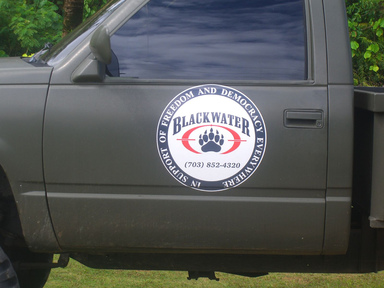
It’s true that Machiavelli observed that mercenaries are useless and dangerous, as Paul Krugman writes in Friday’s Times.
It’s also true that there are thousand of mercenaries operating in Iraq outside the rule of law. (I haven’t read anything about mercenaries in Afghanistan, but it’s fair to assume that they operate there as well.)
It wasn’t too long ago that it was reported that Gazprom, the Russian oil- and gas- company has received the green light to organize a security force to protect among other things pipelines.
These days it’s doubtful if a regular army is more motivated than mercenaries.
But the privatization of armed forces is a fact.

As the fighters against poverty need poverty in order to stay alive, the forces protecting us against terrorists at airports, shopping malls, in deserts in Iraq, on the streets of our big cities, need a threat in order to explain their presence and to defend their right to sniff in our bank accounts, e-mails and credit card statements.
Now I have nothing against sniffing in my credit card statements. As of 2008, with the help of my personal assistant Johannes, I’ll publish my credit card statements. People have a right to know what I’m doing, and how I spend my money and if I might go in the near future for a massage with a happy ending not only the state but also my dear readers are entitled to know all about it.
(When I pay with my credit card that is.)


8 comments Last_comment
I really, really love these times. There's so much going on. Although sometimes we dread heading back to medieval times, the medieval times weren't so bad as some people claim.
The thought of myself looking at your credit cards statements makes me very uncomfortable, but I assume that was your intention.
Too much to say on this topic: yes the privatization of security is a big worry. But unstopable process. The Dutch Minister of Defence has consulted an advisory committee on this, because he is struggling to get enough troops for Uruzgan. If you drive around in Kabul as an UNARMED poverty fighter, you have guns pointed at you from the windows of black four-wheel drivers passing by: private security companies that have been hired to protect contractors, often US contractors.

The marriage between trade and conflict is as old as mankind and can be a tipping point for both conflict and peace. Mary Anderson's Do No Harm approach is based on that. The whole set-up of EU and UN (ECOSOC committee) starts from the thinking that trade can create interdependencies that may prevent people from fighting wars. There are however more examples of trade fuelling conflicts, I am afraid. The whole Aceh conflict was intensivied by the fact that oil multinational Exxon Mobile started to pay Indonesian security forces to protect their properties. But protection needs threat, as you rightly stated. So at night, troops would dress up in civilian cloths and start some hick-ups in villages, creating some more terror and turmoil. Same for Freeport Mine in West-Papua and so many others.

OK, and I of course have to respond to your logic on poverty fighters. You are absolutely right of course, on a theoretical level. But just to bring in some nuance: poverty fighters have signed codes of conduct saying that they should as a rule abstain from using armed escort and may only do so as a last resort, in immediate and large scale humanitarian emergencies, if that would be the only way to reach people in need. Figure that out while traveling savely and embedded to Kandahar, mister ;-)!
That is why I almost never use my credit card, to use for emergencies only.
In fact, the armies follow were the power dwells. Our welfare is no longer in the hands of the tribal leader, the king nor the state, but now it is the company, for better and for worse.
Mieke
Nobody is forcing you to peep into my credit card statements. You can obtain the booklet or you cannot obtain the booklet. The booklet won’t be cheap.
Annette
You misunderstood, I never complained about poverty fighters being escorted by security personnel. Even they are entitled to not being kidnapped.
I just said that poverty fighters need the poverty to justify their fight. Or their jeep for that matter, their salary.
The Lebanese archictect Tony Chakar said to me this spring in Beirut that the do-gooder, if this is to derogatory for you, the helper first and foremost wants to establish that he is superior to the person he is helping.
I won’t be going to KAF, it’s straight from Kabul to TK.
Arnon
I did not misunderstand but made a few `horse jumps' in my mind which I did not write down, so my logic was difficult to follow. And I just liked to provoke a bit, or at least respond to the hidden critique I sensed from you on poverty-fighters by teasingly pointing my finger back at you and saying that however disfunct they may be, poverty fighters at least have the guts and principles to travel around without armed escorts. But traveling with army to TK may be just as dangerous, so I wish you luck and good health. And I will stop this crazy debating over something I actually agree with.

On your Lebanese guy: I already wrote that quote down in my little red note book a long time ago when I first read it in your NRC article. See my email for my response to that. And I have another quote from Joris Luyendijk in that same note book which is even more painfully true:

Daar liep ik, in de luxe en vrijheid temidden van armoede en onderdrukking. Dat was aanstootgevend maar na een tijdje niet meer, en dat was pas écht aanstootgevend.

Ciao!
Annette
Fighting poverty is with a few exceptions nothing else but outsourcing unemployment.